Water spilling over the front
Overflow can involve blockage, insufficient capacity, an outlet issue or the gutter’s position. The way water reaches the gutter matters as well as the size of the channel.
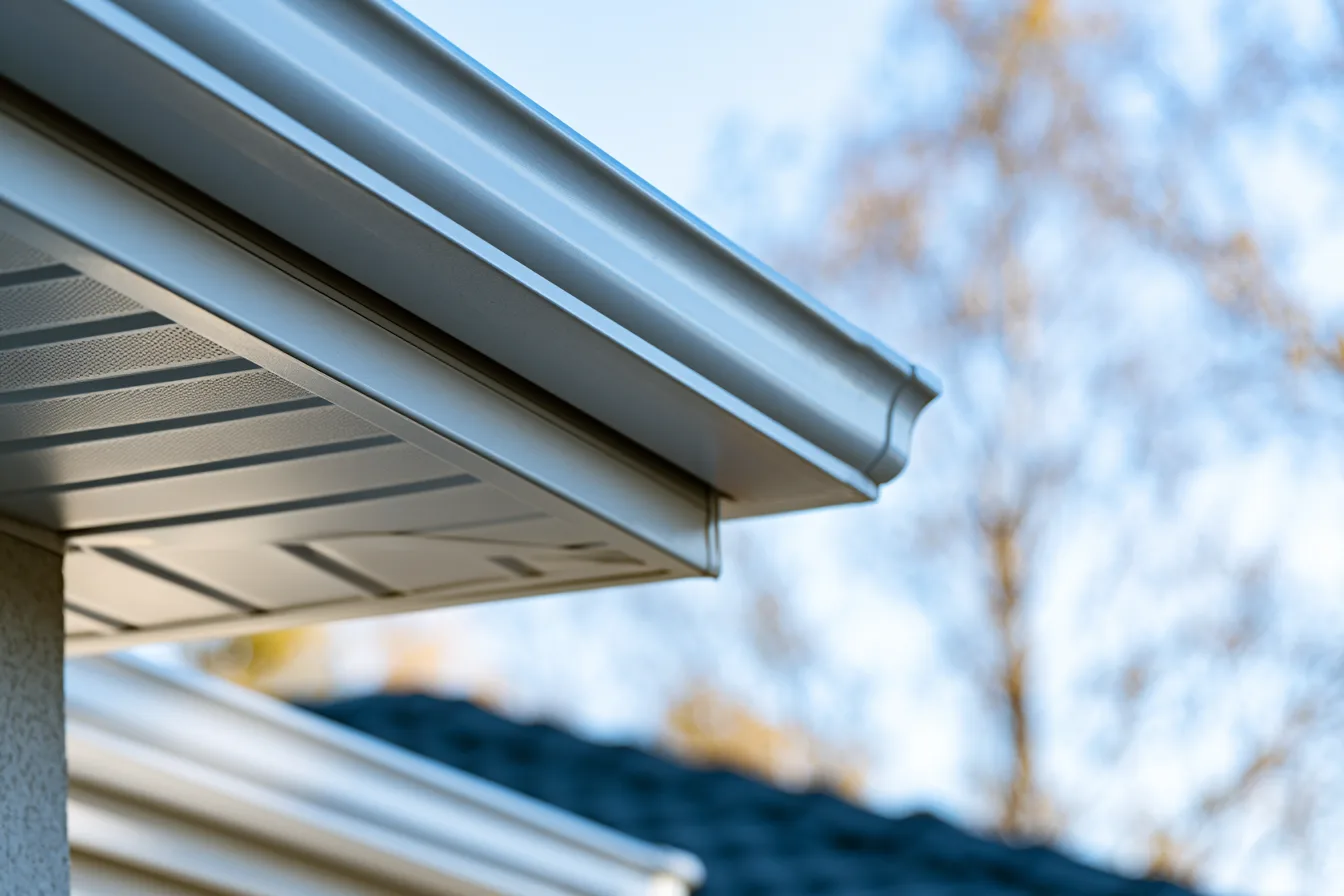
A gutter should collect water at the roof edge and carry it to a useful discharge point. When it overflows, pulls loose or leaks at a joint, the cause may involve more than the visible break.
The roof area feeding the run, its slope, the outlet locations and the support behind it all affect performance. A sound repair begins by understanding that path. Replacing one section without considering where the water goes next can leave the same problem in place.
Request a free roof inspection and describe the gutter concern. If runoff is reaching a doorway, walkway or wall, include that detail in the conversation.
Overflow can involve blockage, insufficient capacity, an outlet issue or the gutter’s position. The way water reaches the gutter matters as well as the size of the channel.
A leaking joint may be repairable when the material and support remain sound. Corrosion, movement or a damaged run can make replacement of the affected section more useful.
Hangers need secure attachment to suitable backing. If the fascia or supporting area has deteriorated, fastening into the same weak material will not resolve the problem.
An outlet should lead water away without sending it toward an entrance or another problem area. The destination at ground level belongs in the gutter plan.
Roof planes and valleys can concentrate water at particular edges. Gutter capacity and outlet placement should account for that flow rather than treating every run alike.
Pitch and hanger placement help direct water through the gutter. The fascia and backing must be suitable for the attachment, especially where an old run has pulled away.
A downspout solves only part of the problem if it releases water beside a vulnerable doorway or wall. Discuss the route beyond the outlet as part of the scope.
Get the overflow or loose gutter checked with the roof edge.
Option 1
A defined leak, a loose connection or a local support issue may be repairable when the surrounding gutter and backing are in good condition. The repair should address the reason it failed.
Option 2
Widespread deterioration, repeated movement or a poorly arranged run may support replacement. The new scope should include outlets, corners, supports and any related fascia work.
Explain where water spills or collects and whether the problem is limited to one corner. Safe photos from the ground can help show the pattern.
The assessment considers the gutter, downspouts and the surface they attach to. Roofing edges that feed the gutter may also need attention.
Put the complete water route in the scope: repairs or replacement, outlets and downspout discharge. Identify any separate fascia or roof-edge work so the connection between jobs is clear.
Not automatically. Sound gutters may remain useful, while damaged or poorly arranged runs may need work. Discuss their condition and protection during the roofing project.
The roof replacement page explains how related details fit into the scope.
Sometimes capacity is part of the issue, but a larger channel alone doesn’t fix a blocked outlet, poor slope or concentrated flow entering in the wrong place. The entire water path needs to be considered.
The attachment needs sound support. If the backing has deteriorated, repair it before securing the gutter. Include that related work when the scope is discussed.
No. Debris, outlets and the roof edge still need attention. Any cover system should be considered in relation to the existing gutter and the way water reaches it, rather than treated as a permanent end to maintenance.
Overflow, a loose gutter or water collecting beside the house deserves a closer look. Describe the problem when you call, and include any roofing work you are planning.