A sound, compatible surface
The coating needs to adhere to the existing material or specified primer. Surface condition, previous coatings and contamination can affect compatibility.
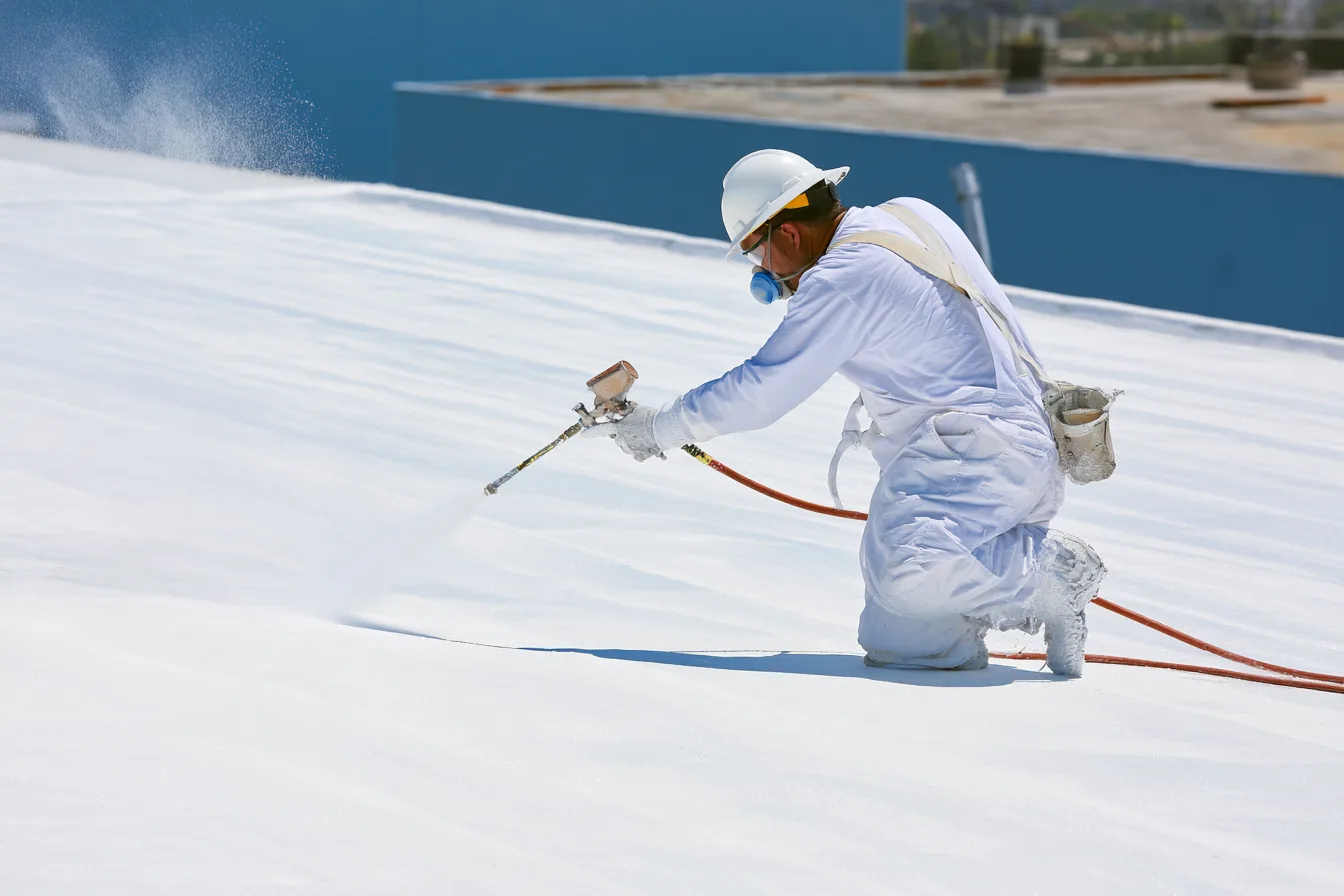
A coating can provide a renewed surface on a suitable existing roof, but it can’t make damaged layers underneath sound. The first decision is whether the current assembly qualifies for restoration.
Moisture, adhesion, roof condition and drainage need to be assessed before a coating system is selected. Existing leaks and defective details require repair, and wet or deteriorated material may need removal. The roof has to become a suitable base for the coating.
If your business roof is showing wear, request a free inspection and discuss whether repair, restoration or replacement is appropriate.
The coating needs to adhere to the existing material or specified primer. Surface condition, previous coatings and contamination can affect compatibility.
Moisture investigation helps identify material that should not remain under a restoration system. A clean-looking surface alone doesn’t establish that the insulation is dry.
Seams, curbs, penetrations and terminations need attention before the open field is coated. These connections can’t be treated as incidental touch-ups.
A coating doesn’t create slope or move an outlet. Drainage problems need to be considered as part of qualifying and preparing the roof.
Restoration begins with deciding what can remain, what must be repaired and what preparation the selected system requires.
The final coating coverage and application conditions follow the selected product’s specification. A visual change to the roof isn’t, by itself, evidence that the full preparation was completed.
Option 1
A localized defect may need a compatible repair without coating the entire roof. The work should be proportionate to the roof’s condition.
Option 2
When the existing assembly is suitable, a specified coating system can be considered with the required repairs and preparation included.
Option 3
If the roof can’t provide a sound base, a coating would leave the underlying problem. The replacement scope should explain what must be removed and rebuilt.
Find out whether the existing roof is suitable for restoration.
Cleaning, compatible repairs, adhesion checks and primer where required happen before the final coating. Leaving those activities out of the schedule understates the work and can put the application ahead of a suitable surface.
The selected product sets the temperature, moisture and curing requirements. Weather affects when the surface can be prepared and coated. Nearby intakes, equipment and occupied areas also need to be accounted for in the application plan.
Roof access and equipment service continue after restoration. Keep traffic to appropriate routes and address new damage with repairs compatible with the coating system. A renewed surface still needs clear drainage and attention to its details.
No. Existing leaks need to be identified and repaired as part of preparation. A field coating isn’t a substitute for proper flashing, seam work or removal of unsuitable material.
Wet material needs investigation and an appropriate repair scope. Concealing it under a coating doesn’t restore its condition. The extent and location of moisture affect the decision.
No. Products have different substrate, preparation, application and service requirements. The selected system needs to match the existing roof and the expected conditions.
The existing condition and preparation determine the scope. Extensive repairs can change the comparison. Ask for the actual work required by each viable option rather than relying on a general percentage saving.
A roof that looks worn isn’t automatically ready for a coating. Start with a free inspection and establish whether the existing system can support the necessary repairs and preparation.