The existing assembly
Known roof layers, deck condition and moisture need to be considered before a recover is proposed. Sometimes selective investigation is necessary to understand what can remain.
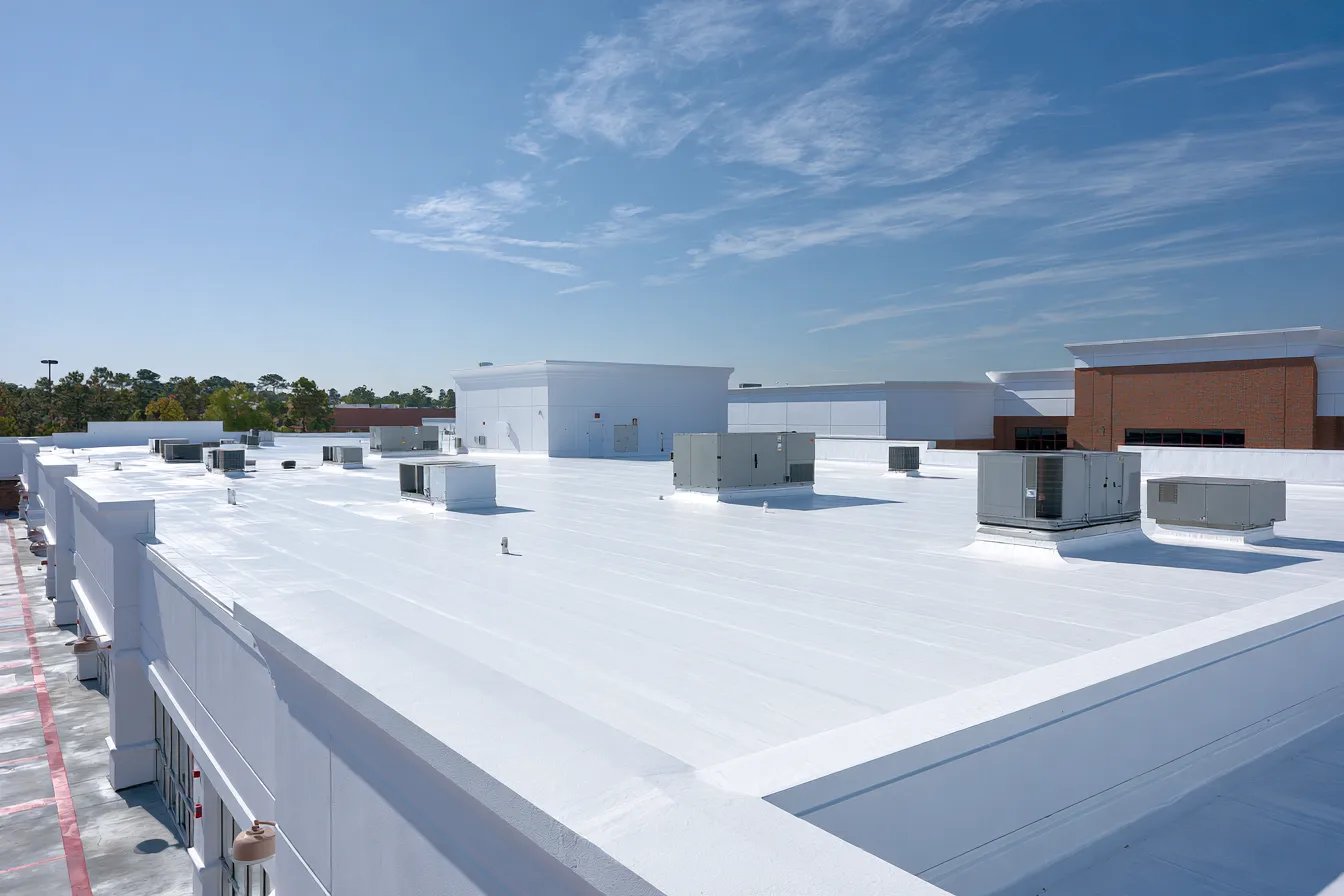
TPO is a single-ply roofing membrane used on many low-slope buildings. Its sheets are joined with heat-welded seams, creating a connected covering around the roof’s details.
A TPO proposal should explain more than the thickness or color of the sheet. The base beneath it, the attachment method, insulation, drainage and transitions all affect how the roof is assembled. Existing wet or unsuitable material can’t be made sound simply by covering it.
Request a free inspection to discuss the roof already on the building and the scope of a new membrane project.
Known roof layers, deck condition and moisture need to be considered before a recover is proposed. Sometimes selective investigation is necessary to understand what can remain.
The roof needs to direct water toward suitable outlets. Tapered insulation or other drainage work may be part of the design, depending on the existing geometry and building requirements.
The deck and specified system guide attachment. Insulation and cover-board choices belong in the proposal alongside the membrane, with the intended purpose of each layer explained.
Curbs, pipes and roof edges require compatible flashing and terminations. Their quantity and arrangement can affect scope as much as the size of the roof field.
A TPO roof is assembled from supporting layers, attachment and welded membrane details. The drawing shows the relationship of those parts; the actual specification depends on the building.
The deck supports the roof system. Its condition and type affect attachment and the suitability of an existing assembly for further work.
Insulation, cover board where specified and any tapered layout help form the base below the membrane. Wet or unsuitable layers need to be addressed rather than concealed.
A cover board can provide a supporting and protective layer above the insulation. Its use and type depend on the specified assembly.
Sheets are joined with heat-welded seams. Surface preparation, seam quality and compatible flashing around curbs, pipes and roof edges complete the covering.
Option 1
Retaining an existing roof can be considered only when its condition, assembly and applicable requirements support that approach. The proposal should identify how moisture and underlying suitability were assessed.
Option 2
Wet, deteriorated or otherwise unsuitable material may need removal. A tear-off also exposes conditions that can’t be fully seen beforehand, so additional-work handling should be clear.
Plan the base, drainage and membrane as one system.
The scope brings deck preparation, insulation, attachment and membrane details together. Material deliveries and roof loading need to fit the building, including any areas that can’t serve as a staging point.
Removal, preparation and new covering need a sequence that accounts for weather and the space below. Rooftop equipment and access routes can require coordination with other building services; the membrane work should not leave those connections undefined.
Equipment still needs servicing after the roof is finished. Appropriate access and walkway protection, where specified, help keep routine foot traffic from becoming avoidable wear on the membrane. The finished roof details should remain accessible for maintenance.
A white membrane’s reflectivity is one part of the building’s energy performance. Insulation, mechanical systems and how the property is used also affect consumption, so the roof alone doesn’t establish what the bills will be.
Thickness is one specification, but it doesn’t replace suitable attachment, a sound base or well-executed details. Product selection should follow the roof design and the needs of the building.
A compatible repair may be possible where the surrounding material and underlying assembly are suitable. The area needs assessment and preparation appropriate to the system.
Read about flat roof repair for the repair decision.
Warranty options depend on the selected product, installation and party offering the coverage. The actual proposal needs to identify the applicable written terms, including any requirements and exclusions.
A new membrane is part of a larger roof assembly. Arrange a free inspection to discuss the existing layers, drainage and details before deciding how the project should be built.